
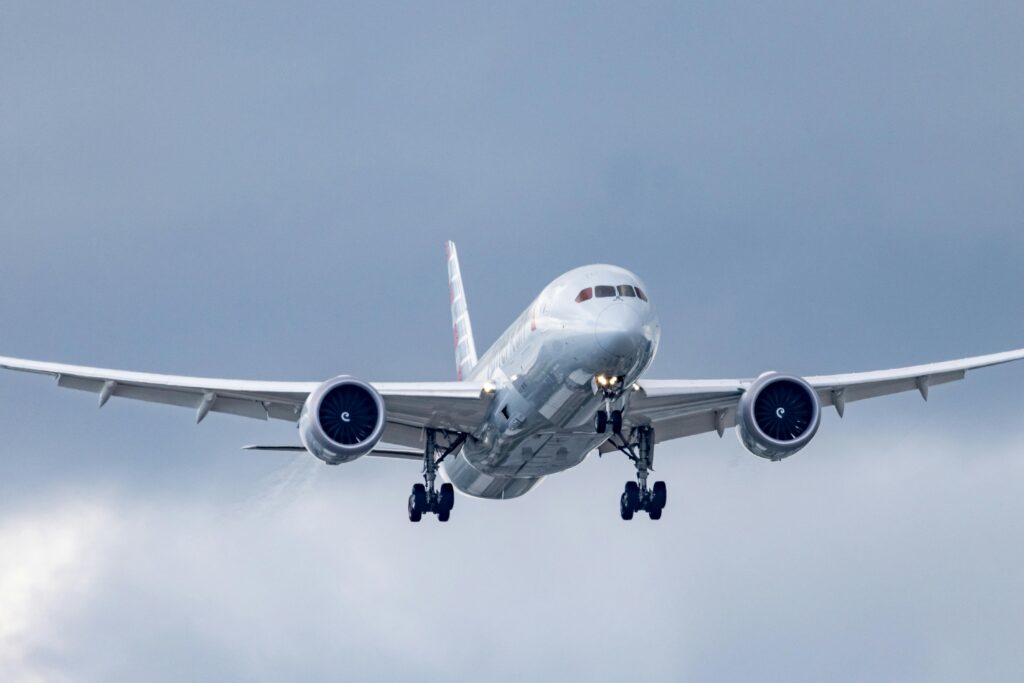
During takeoff and landing, an aircraft must generate sufficient lift at relatively low airspeeds. However, wings are primarily optimized for efficient cruise flight, not low-speed operations. To resolve this aerodynamic compromise, aircraft are equipped with high-lift devices. These devices temporarily modify the wing’s aerodynamic characteristics, allowing the aircraft to operate safely at lower speeds without permanently compromising cruise efficiency.
Why High-Lift Devices Are Necessary
Lift is primarily governed by the lift equation:
L = ½ ρ V² S CL
At low speeds, lift can only be increased by:
- Increasing wing surface area (S)
- Increasing the coefficient of lift (CL)
High-lift devices achieve one or both of these objectives. Without them, takeoff and landing distances would be excessively long, and stall speeds would be unacceptably high.
Main Types of High-Lift Devices
1. Flaps
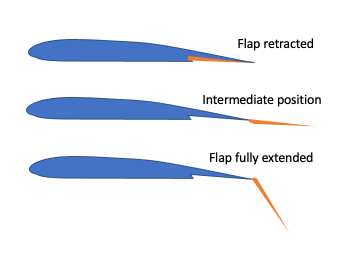
Flaps are the most commonly used high-lift devices and are located on the trailing edge of the wing. They increase lift by:
- Increasing wing camber
- Increasing effective wing area
- Raising the maximum coefficient of lift (CLmax)
2. Leading-Edge Devices
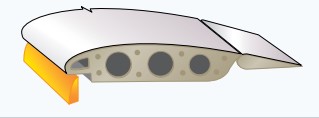
Leading-edge devices primarily delay stall by maintaining smooth airflow over the upper wing surface at high angles of attack.
a) Leading-Edge Slats
- Extend forward from the wing leading edge
- Create a slot for high-energy airflow
- Delay airflow separation
- Increase stall angle of attack
b) Leading-Edge Flaps (Krueger Flaps)
- Common on older or low-wing aircraft
- Deploy from the lower surface of the wing
- Protect the leading edge and improve low-speed lift
Aerodynamic Effects of High-Lift Devices
Increased Lift
High-lift devices allow the wing to operate at a higher CLmax, enabling flight at lower airspeeds without stalling.
Increased Drag
While lift increases, drag also rises significantly. This is beneficial during landing, as it allows steeper descent angles and better speed control.
Lower Stall Speed
By increasing CLmax, high-lift devices reduce stall speed, improving:
- Takeoff safety margins
- Landing performance
- Short-field capability
Operational Use in Flight Phases
Takeoff
- Partial flap settings are used
- Improves lift at lower speeds
- Reduces takeoff distance
- Limits drag to maintain acceleration
Landing
- Larger flap deflections are selected
- Maximizes lift and drag
- Allows lower approach speeds
- Enables steeper descent paths