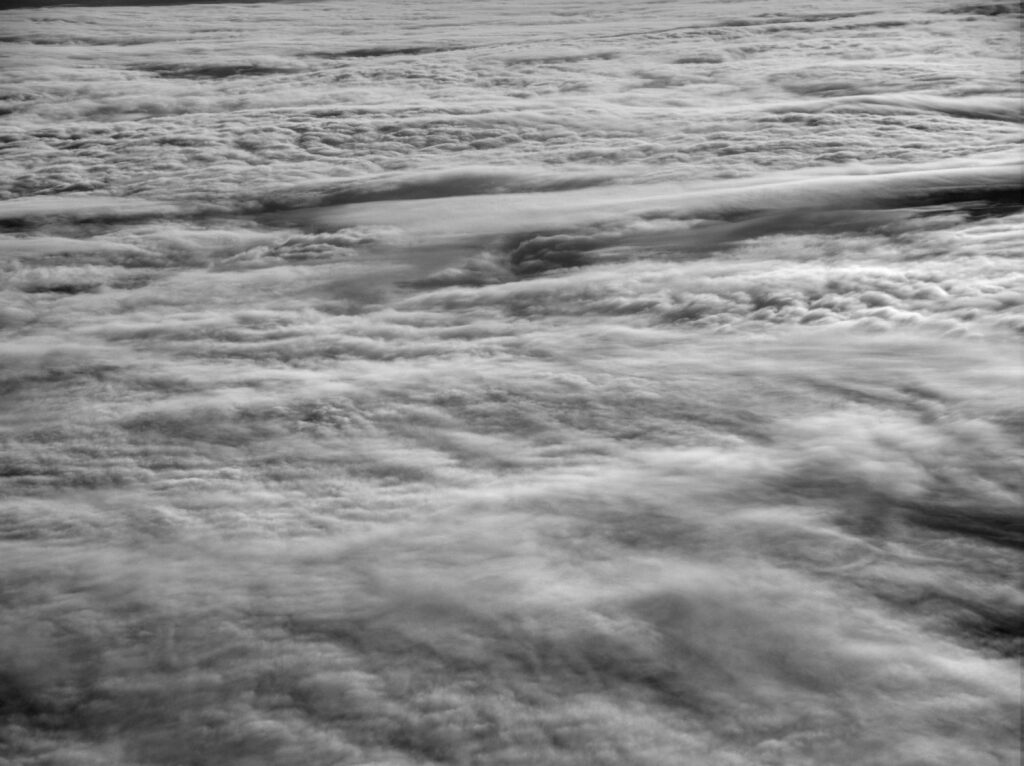
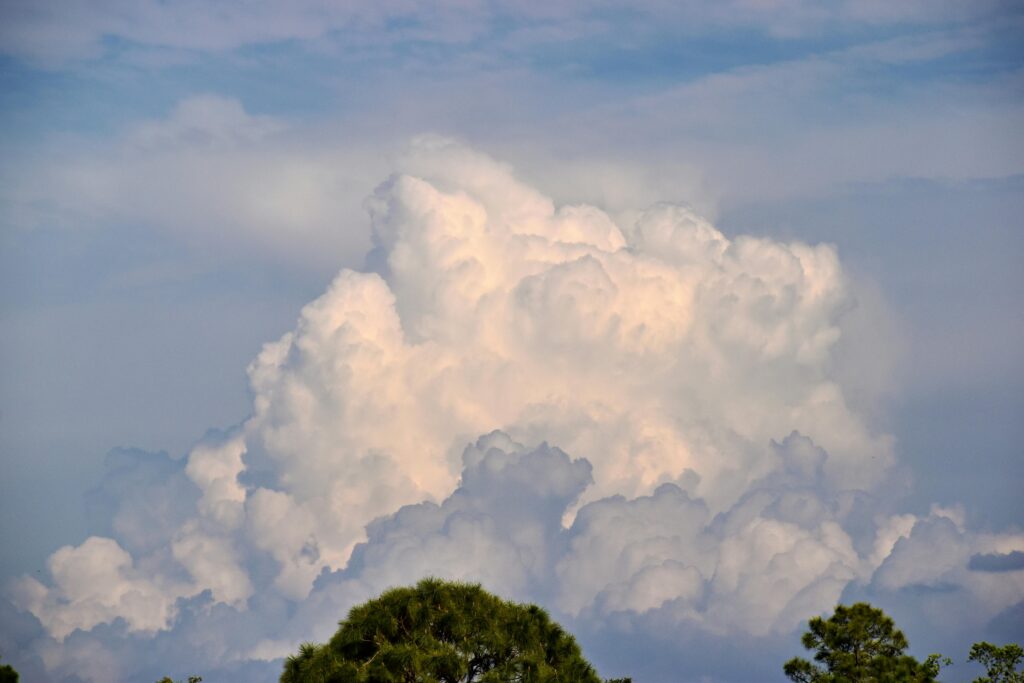
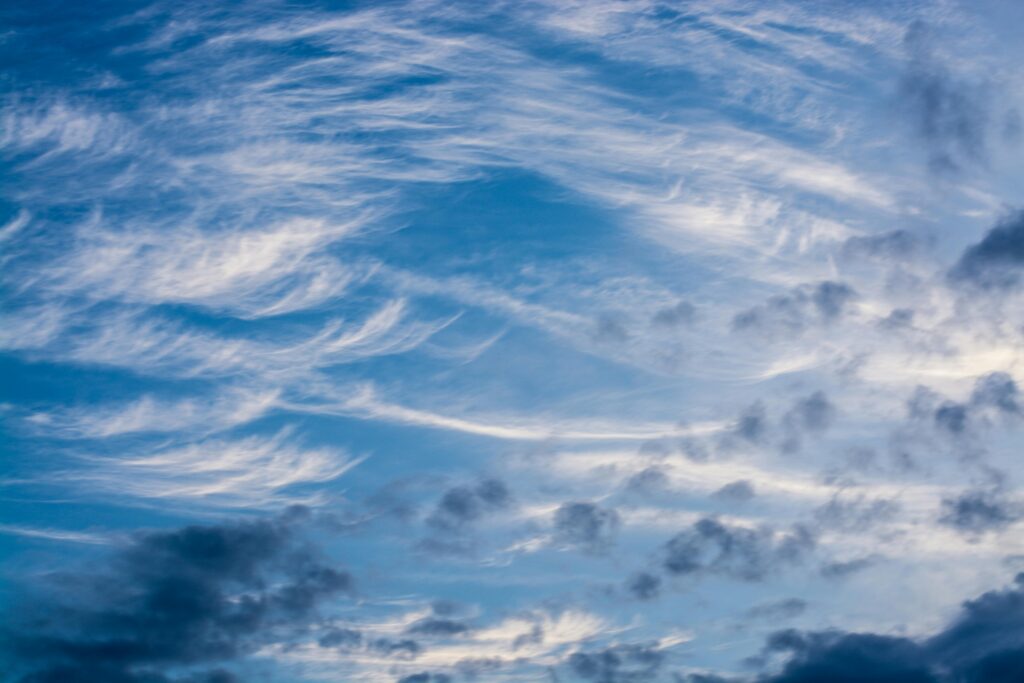
Clouds form when air rises, cools, and water vapor condenses into water droplets or ice crystals. They are classified based on altitude and shape (structure). Understanding cloud types helps identify weather conditions, precipitation, turbulence, and flight safety hazards.
1. Cloud Classification by Altitude
Cloud altitude refers to the height of the cloud base above the Earth’s surface.
A-High-Altitude Clouds (Above 20,000ft)
They are mainly composed on ice crystals.
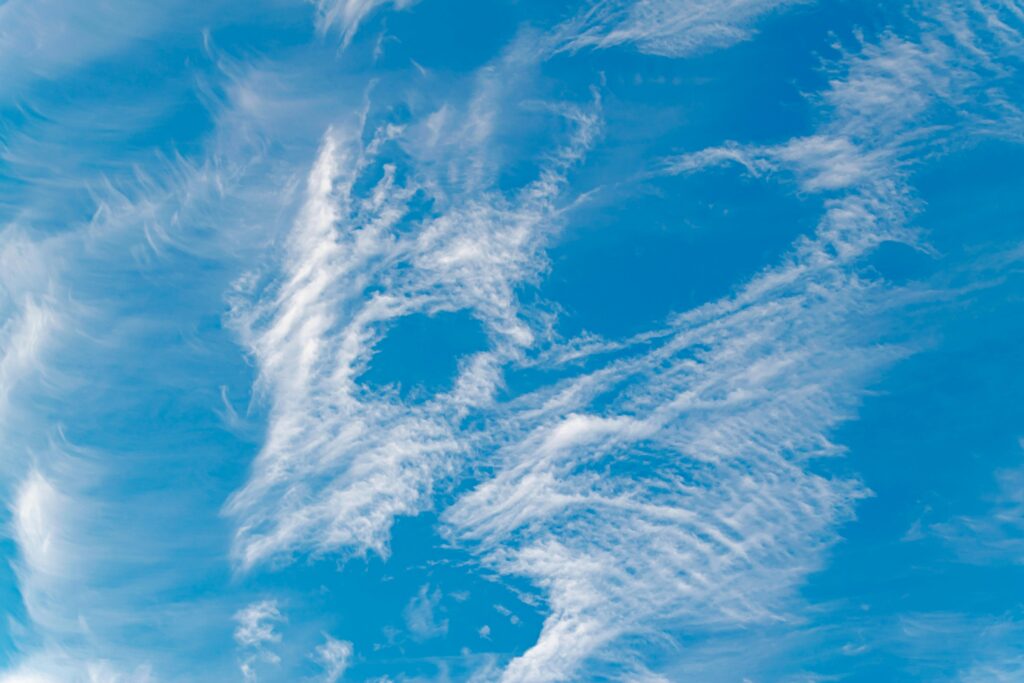
1-Cirrus (CI)
They are a thin, white, feather-like clouds. They usually form in fair weather and indicate a change in weather within the next day.
2-Cirrostratus (CS)
They are thin white veil covering the sky which show Halos visible around the sun or moon. They indicates that rain or snow is likely within 12–24 hours.
3-Cirrocumulus (CC)
Small, white ripples or “fish-scale” pattern they show instability at high altitudes and indicate no precipitation.
B-Medium-Altitude Clouds (6,500ft to 20,000ft)
They are composed of water droplets and ice crystals.
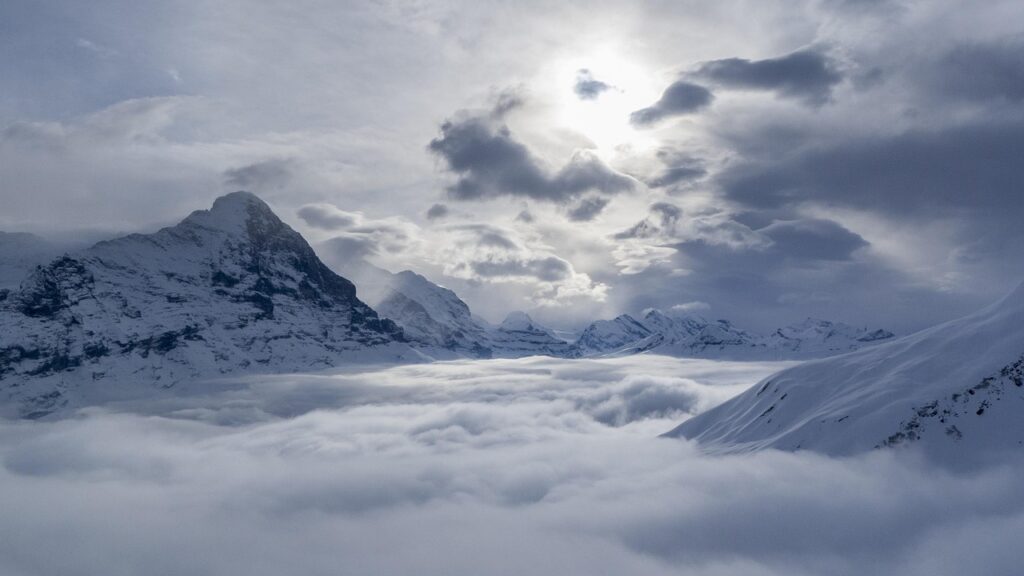
1-Altostratus (AS)
It is a Gray or blue-gray cloud layer through which the Sun appears as a bright spot. It indicates widespread rain or snow approaching.
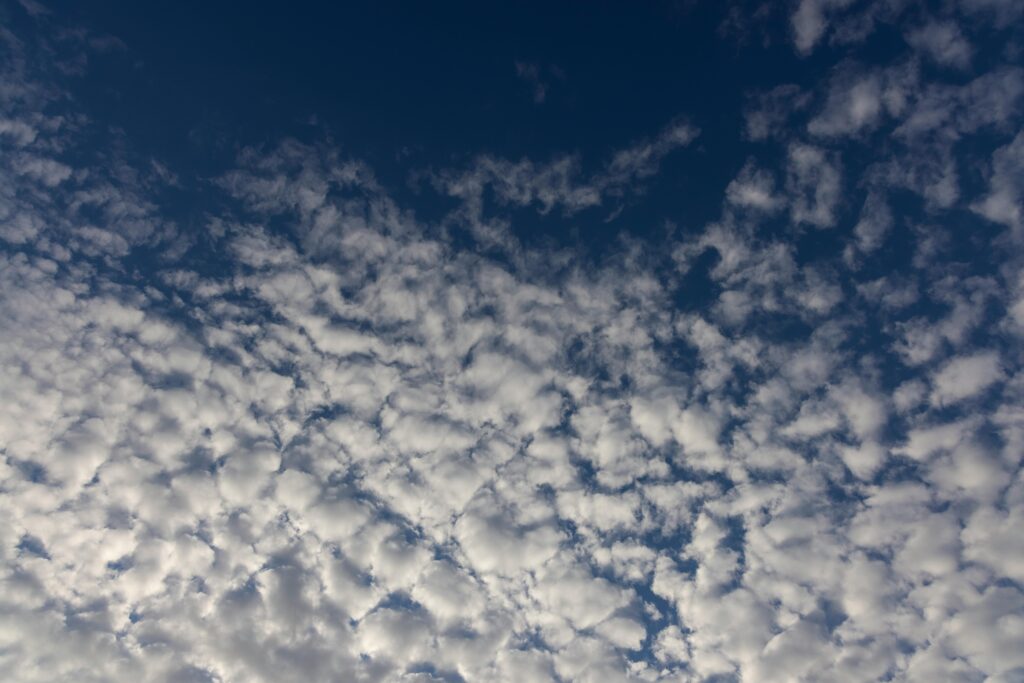
2-Altocumulus (AC)
It is a white or gray cloud patches with rounded shapes often seen before thunderstorm (TS) development and can indicate unstable weather coming later in the day.
C-Low-Altitude Clouds (Surface to 6,500ft)
They are mainly composed of water droplets.
1-Stratus (ST)
It is a low level, uniform gray cloud type and produces mist or light drizzle. It causes poor visibility and low ceilings.
2-Stratocumulus (SC)
It is a low level cloud with large rounded masses and often appears in rows or patches usually with no precipitation and indicating stable weather condition.
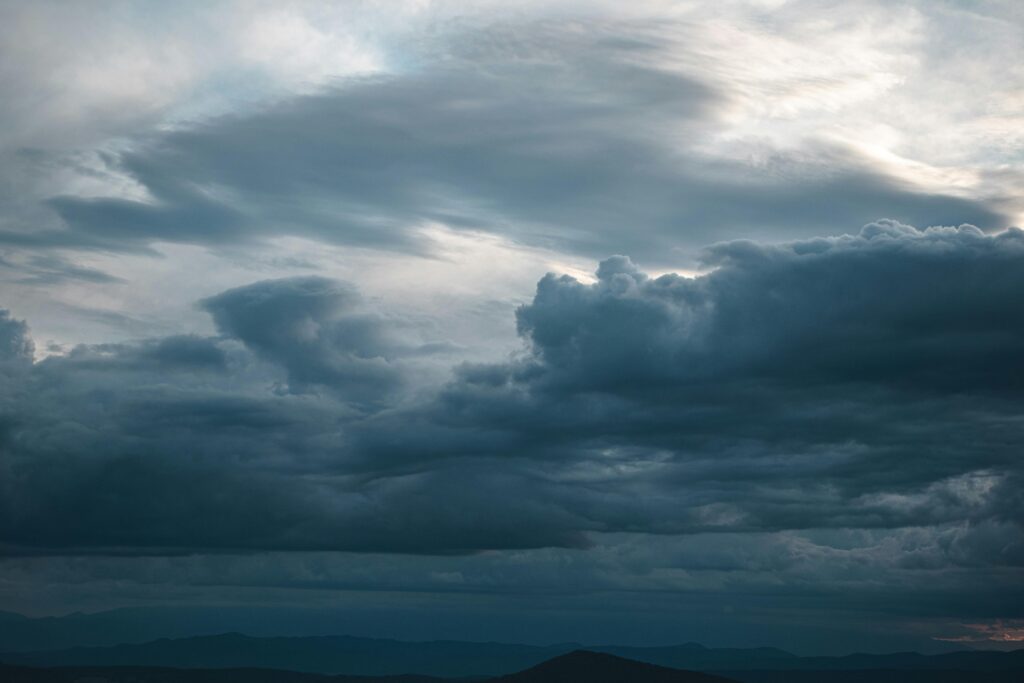
3-Nimbostratus (NS)
It is characterized by a thick, dark cloud layer and produces continuous rain or snow. It covers large areas for long periods.
2. Cloud Classification by Structure (Form)
Clouds are also classified by their shape and vertical development
A.Stratiform Clouds (Layered Clouds)
They are formed in stable air with little vertical movement. In this category, we have:
üStratus
üAltostratus
üCirrostratus
üNimbostratus
Characteristics of this category of clouds
üSpread in horizontal layers
üCover large areas
üProduce steady precipitation
B.Cumuliform Clouds (Vertical Clouds)
They are formed by rising warm air (convection). In this category, we have:
1. Cumulus (CU)
üWhite, puffy clouds with flat bases
üIndicate fair weather
üMay grow vertically if instability increases
2. Cumulonimbus (CB)
üTall clouds with anvil-shaped tops
üResponsible for thunderstorms (TS)
üAssociated with heavy rain, hail, lightning, strong winds and windshear.
C.Cirriform Clouds (High-Level Ice Clouds)
They are thin clouds made entirely of ice crystals: It this category, we have:
üCirrus
üCirrostratus
üCirrocumulus
Characteristics of this category of clouds
üDo not produce precipitation
üFound at high altitudes
üIndicate strong winds and changing weather
Conclusion
Clouds are key indicators of atmospheric conditions. By identifying cloud types, pilots and weather observers can better understand current and future weather. This is essential for safe conduct of flight and accurate weather interpretation.