There are four fundamental aerodynamic forces acting on an aircraft.
Understanding how these forces act on an aircraft is essential for pilots, aviation students, engineers. These forces determine whether an aircraft climbs, descends, accelerates, decelerates, or maintains steady flight.
Those four forces are Lift, Weight, Thrust, and Drag.
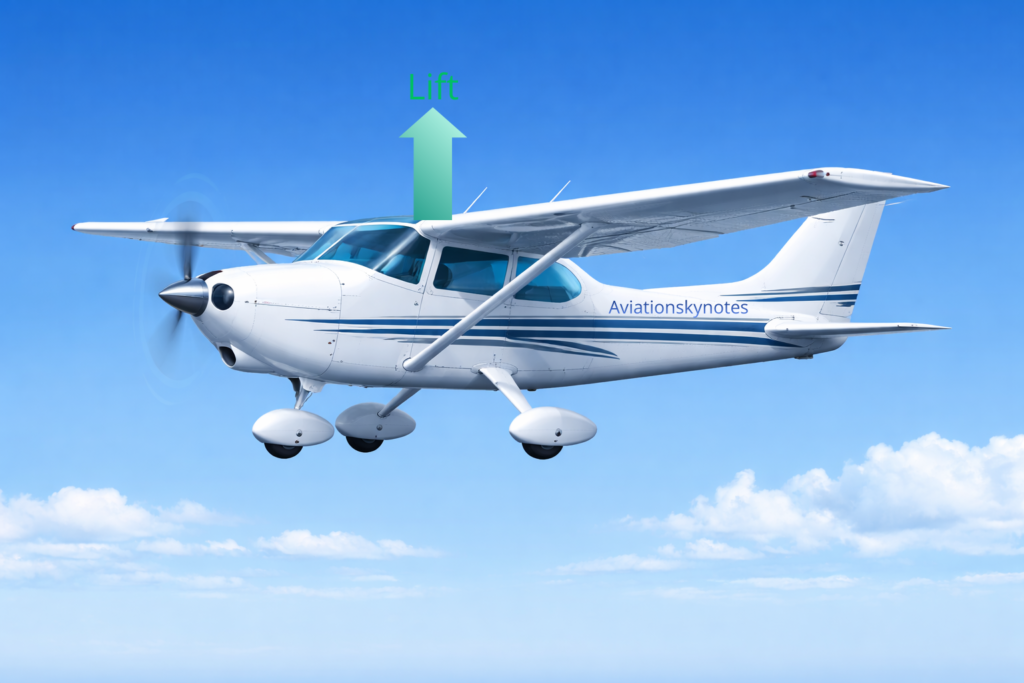
1. Lift
Lift is the aerodynamic force that acts upward and opposes the aircraft’s weight. It is generated by the wings as air flows over and under them. It is created due to: The shape of the wing (airfoil), the angle of attack (the angle between the wing and the relative airflow), the Air density, airspeed, and wing area.
As air flows over the curved upper surface of the wing, it accelerates and creates lower pressure above the wing and the higher pressure below the wing pushes the wing upward because of the difference in pressure. Lift is function of airspeed, angle of attack, wing design and surface area and air density (altitude and temperature).
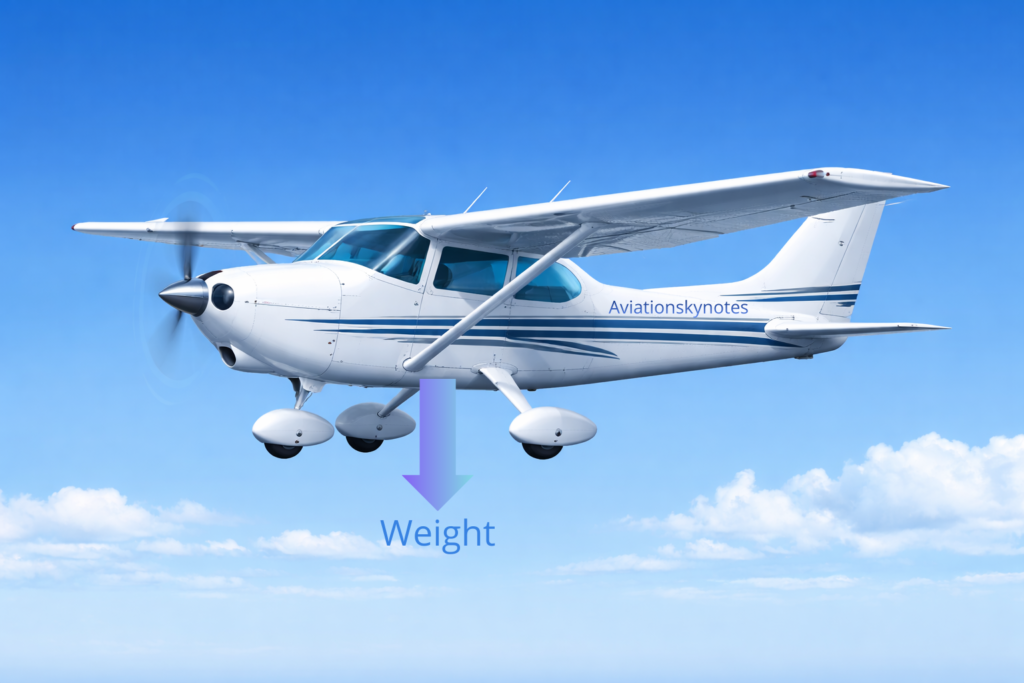
2. Weight
Weight is the force caused by gravity pulling the aircraft toward the center of the Earth. It acts vertically downward through the aircraft’s center of gravity. The aircraft weight remains relatively constant during a short flight but decreases gradually as fuel is burned on medium to long haul flight.
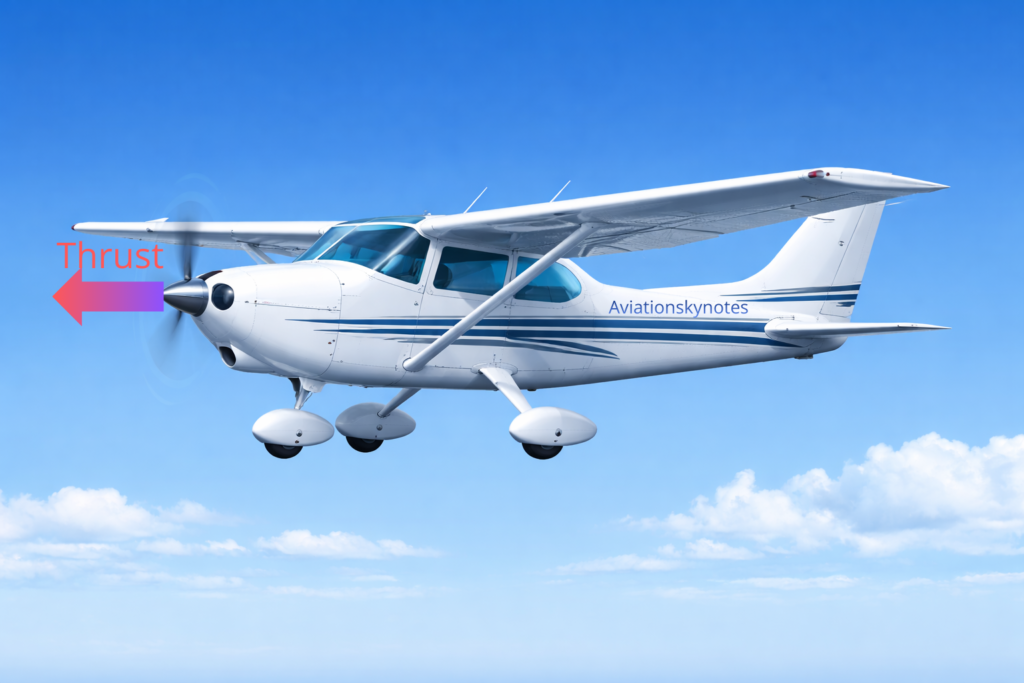
3. Thrust
Thrust is the force that propels the aircraft forward. It is generated by the aircraft’s engines. It allows the aircraft to accelerate along the runway, overcome drag, maintain or increase airspeed, climb. The direction of thrust is generally forward, although its line of action may vary slightly depending on engine installation.
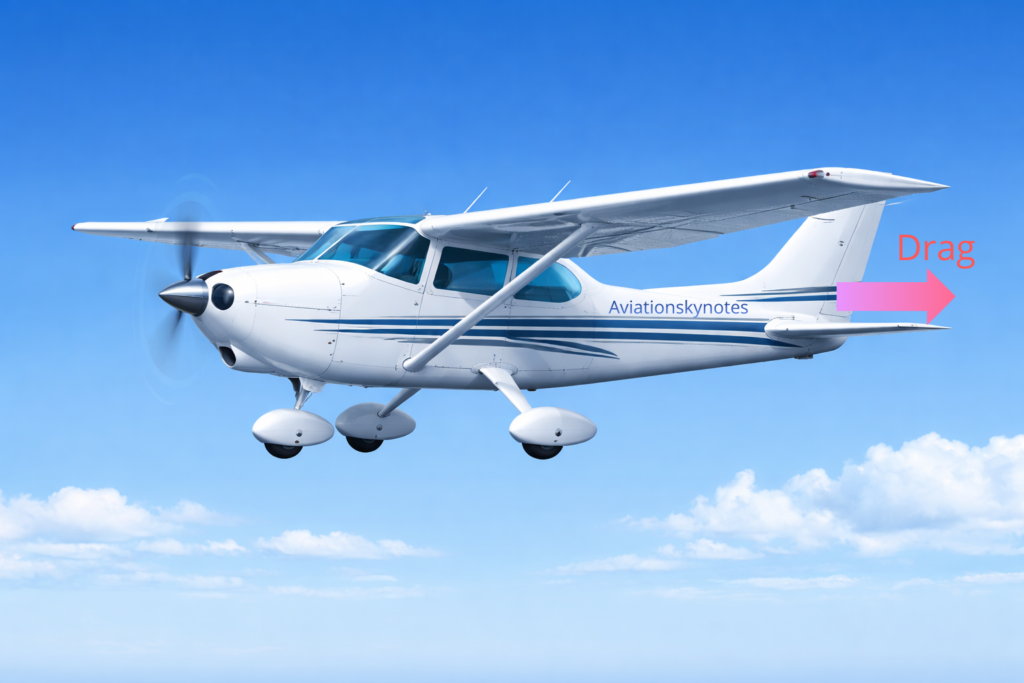
4. Drag
Drag is the aerodynamic force that acts opposite to the direction of motion. It resists the aircraft’s movement through the air. There are different types of drag: Parasite drag and Induced drag (from lift generation).